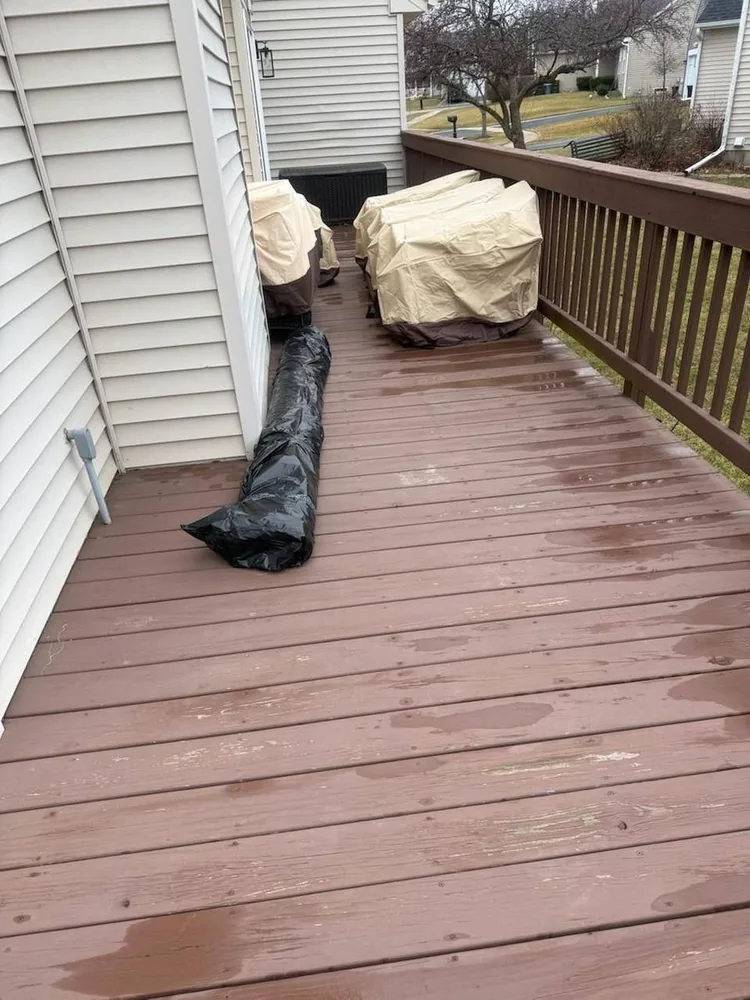
How Often Should You Stain a Deck in Illinois? (Freeze-Thaw Reality)
Deck stain marketing promises "10-year protection." Illinois weather laughs at that. Between summer UV, autumn rain, and the freeze-thaw cycles that pry wood fibers apart every winter, decks here live a harder life than the label assumes.
The Real Schedule for Our Climate
In northern Illinois, horizontal surfaces (deck boards, stair treads) realistically need re-staining every 2–3 years. Vertical surfaces — railings, posts, skirting — shed water better and stretch to 4–5 years. Semi-transparent stains fade sooner but age gracefully; solid stains last longer but peel like paint when they finally fail, which makes the next prep much harder.
The 10-Second Water Test
Don't guess — test. Pour a spoonful of water on a high-traffic board. If it beads up, the finish is still working. If it soaks in and darkens the wood within a minute, the deck is due: unprotected wood is absorbing every rain and freezing wet, and that's how boards cup, check, and rot.
Prep Decides Everything
Stain fails early for one reason: it went over dirty or slick wood. Proper prep means cleaning (a deck wash or careful pressure washing), letting the wood dry 48+ hours, and a light sand on smooth or previously coated boards so the new stain can bite. Skipping the sand on a previously stained deck is the most common reason a "2-year" result turns into a "one summer" result.
Stain Won't Fix Broken
Before any stain goes down, walk the deck: boards that flex or feel soft at the fasteners, rail sections that wiggle, stair treads that bounce. Stain is cosmetic; those are structural. Replacing a handful of failed boards and re-securing rails before staining costs little — and it's the difference between a deck that looks good and one that's actually safe for the summer barbecue crowd.
EasyFix repairs, sands, and stains decks across the northwest Chicago suburbs — failed boards replaced, rails re-secured, stain that survives the freeze-thaw. Text a photo of your deck.
Get a Free Quote →